Chattanooga: the newest Hub of Tech, VC talent

Chattanooga at night

Chattanooga, Tennessee is one of the first American cities to have installed fiber optic cables with gigabit speeds across the entire city. While this upgrade was completed a little over 10 years ago, Mayor Tim Kelly says the pandemic brought a surge of new residents all looking for comfortable remote working spaces and quality of life.

Kelly, himself a former businessman and startup founder, credited the 2010 EPB investment in fiber optics as a forward-thinking move by previous leaders. He notes that while Chattanooga doesn’t offer financial incentives for relocation like other places, it does cultivate a vibrant cultural life and family-friendly ethos.

As a result- and specifically since the pandemic- Chattanooga has seen a new balance of tech companies and those working for them; once concentrated in major coastal cities, firms are now widely dispersed in more rural areas across the country. The Brookings Institution found that tech jobs in San Francisco, Seattle, and Los Angeles had slowed or disappeared, while regions like St. Louis, Philadelphia, San Antonio, and Nashville showed an unprecedented uptick.

Brickyard, for example, is a newly established venture fund based in Chattanooga. Cameron Doody, the co-founder, explains that as workers from traditional tech hubs swamped cities like Atlanta and Austin, residents of those cities moved to places like Chattanooga for quiet, comfort, and quality of life. Brickyard invests in international tech companies. The founders then come to headquarters in Chattanooga to rigorously expand their product and enjoy the benefits of amenities like a sauna, a gym, and a steam room.

Uber and Flywheel Riding Toward a New Partnership

Flywheel Technologies and Uber are putting the final touches on a partnership agreement to fully transform transportation in San Francisco.

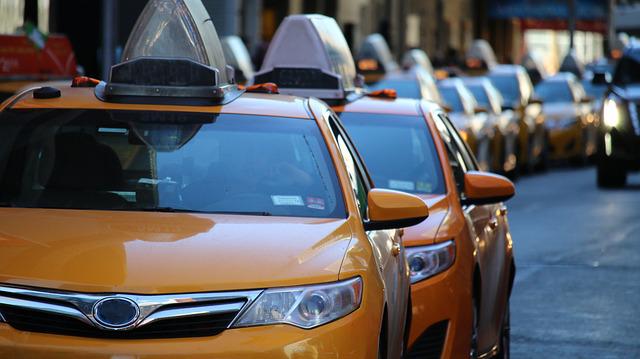
While the cooperation is similar to an agreement Uber penned with taxi companies in New York City, it is a noteworthy shift from years of ferocious battling between the two transportation groups. Uber, which is headquartered in San Francisco, was once sued by a local taxi company in federal court for rapacious pricing schemes. Some taxi drivers have expressed concern that the partnership would mean lower earnings and make it harder for taxi riders to afford a drive. Uber and other companies that rely on gig workers (i.e. Lyft and DoorDash) supported California’s Proposition 22. The bill gave the workers limited benefits but also made it impossible for them to be considered full employees of these companies. The measure passed in 2020, even though most voters opposed it; a judge dismissed it in 2021. This partnership expands Uber’s driver pool substantially. The app’s driver base shrunk rapidly during the height of the pandemic, and many drivers voiced discontent with their low earnings. Rising gas prices have also pushed many drivers away. According to the Municipal Transportation Agency, taxi drivers will benefit too, by leveraging Uber’s ridership toward the city’s taxis.

The agreement, part of Uber’s long-term strategy to increase taxi representation on its app, will allow Uber passengers in San Francisco to hail a cab virtually. The San Francisco Municipal Transportation Agency’s board of directors still has to approve the pilot, and Jeffrey Tumlin, the city’s director of transportation needs to authorize it, but the partnership is slated to begin as early as May 2022.

Google Buys Mandiant

Global tech giant Google has announced its acquisition of Mandiant, the cybersecurity company. In a $5.4 billion deal, Google will expand its services to provide businesses with strategic planning assistance for and in response to cyberattacks.

Google Mandiant

The purchase comes as Google tries to distinguish itself and its cloud computing platforms from those offered by Amazon and Microsoft.

Organizations around the world are facing unprecedented cybersecurity challenges as the sophistication and severity of attacks that were previously used to target major governments are now being used to target companies in every industry.

Thomas Kurian, chief executive of Google Cloud

Based in Virginia, Mandiant has over 2,300 employees, making it Google’s second-biggest purchase ever. The biggest was Google’s 2011 buy of Motorola for $12.5 billion.

Something’s Brewing at Starbucks

Employees at four Starbucks stores in New York City have petitioned to unionize through the National Labor Relations Board. This development follows months of efforts to unionize at three Buffalo Starbucks locations, two of which have already successfully established unions. The NYC Starbucks employees have requested to hold a vote on March 3.

In letters to Starbucks president and CEO Kevin Johnson, workers from the four stores expressed concerns about deteriorating work conditions during the pandemic and unfair salaries. The employees have received support from more than 70 New York elected officials, including City Council members and U.S. representatives, according to the New York Times. A signed letter read: “New York City is a union town and union-busting has no place here. We believe that these organizing efforts will ultimately lead to a stronger and more sustainable future for Starbucks, the workers, and our city and state.”

Although Starbucks has claimed not to be anti-union, just last week the company fired seven Memphis employees who tried for form a union claiming they had violated company policies. A few years earlier, two Philadelphia workers trying to unionize were also fired.

Mid-America’s Economy is Strong, if Slowing

Creighton University’s Mid-America Business Conditions Index, a premier economic barometer for the region of states between Minnesota and Oklahoma, shows a recent slight drop. Nevertheless, it remained above neutral growth for the 20th consecutive month. Employment in the region dropped to 43.6, its weakest since June 2020, the third consecutive decline in the monthly index.

“Creighton’s monthly survey results indicate the region is adding manufacturing activity at a positive pace, but with much weaker job numbers for the month. In terms of supply chain disruptions and bottlenecks for the first half of 2022, approximately one-third of supply managers expect delays to worsen with only 12% anticipating improvements. Despite healthy growth over the past year, compared to its pre-pandemic level, U.S. Bureau of Labor Statistics employment data indicate that the region has lost 16,000 manufacturing jobs, or 1.1%,”

Dr. Ernie Goss, the study director

Barbie and Balmain Pair Up for Couture NFT Project

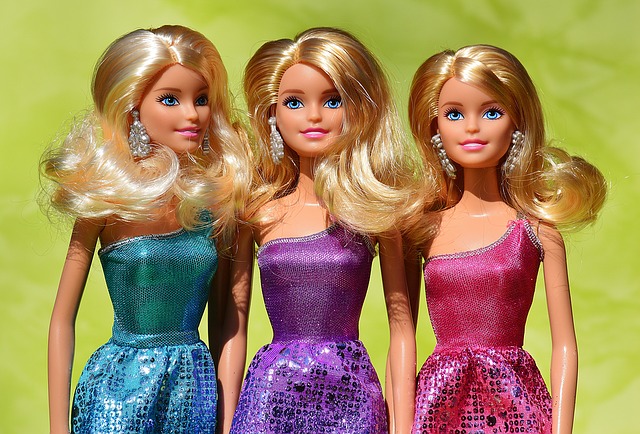
Barbie, the quintessential American toy by Mattel, announced a partnership with French fashion powerhouse Balmain.

This collaboration is surprising on many levels. First, there is no actual doll involved. Second, the collection is a mix of real fashion and NFTs.

The collection includes 50 adult garments inspired by the iconic Barbie doll. Avatars of diverse racial backgrounds model the clothes, and three NFTs of unique looks are being sold at auction.  Barbie is extending its efforts into the realm of virtual collectibles as each NFT includes a doll-sized physical design. The entire collection and the NFT designs are unisex: there is no more Barbie and Ken, just high-end fashion for all.

Mattel also has a partnership with Gucci to create Hot Wheels Collectibles.

America’s Job Market

There has not been so much good news for America’s labor  market recently. Interestingly, while there seemed to be an increase in wages and hours spent in the office, unfortunately this did not quite mirror productivity and output. In fact, at the end of the third quarter, figures showed that productivity dropped (SAAR) by 5.2%, making it the largest drop since Q21960 (which recorded a drop of 6.1%).

Despite these pessimistic and potentially troubling numbers, according to Action Economics’ Chief Economist Mike Englund, we should be seeing a “solid gain” for 2021 end of year of 1.7 percent.

According to recent Federal Reserve data however, a drop in US consumer credit from $27.8bn September to $16.9bn in October was recorded.  This was somewhat of a blow to economists who were anticipating a gain of $25bn.

Recycled Footwear Takes a Step Forward

Rothy’s, the American eco-friendly shoe brand, has gotten a significant investment from the owner of Havaianas. Based in San Francisco, California, and valued at $1 billion, Rothy’s also produces purses, bags, wallets, and men’s loafers, all from recycled and marine plastic.

Over the last few years, investors and customers have paid more attention to the environmental and social impact of the companies they back or buy. AllBirds, another sustainable shoe and fashion company, made a 2021 IPO valued at $4 billion.

Rothy’s was founded by Stephen Hawthornthwaite, chief executive, and Roth Martin, president. They remain significant owners and are involved in operational oversight.

American Economic Recovery in the Wake of COVID-19

America’s economic recovery is going well. Unemployment figures are going down (recent report showing that those filing for benefits dropped to the lowest level since 1969); inflation did increase but not as much as economists had predicted. And consumer spending over the last month showed an impressive level of optimism.

With this data, there is a lot of optimism about the speed at which the economy is recovering.  So much so that Wall Street actually raised their predictions for Q4 2021 growth. And not by just a little bit.  Morgan Stanely’s economists changed their growth predictions by more than double – from 3 to 8.7 percent (with JPMorgan economists similarly going from 5 to 7 percent). These numbers had a domino effect, leading to a predicted increase in GDP estimates as well.

But there still needs to be caution exercised. Given the new COVID-19 variant (Omicron) there has been some pessimism and fear which has obviously impacted the recovery as well. Nonetheless, the Gross Domestic Income (GDI) – a measure that’s based on individual and company income – increased substantially more than it did year on year in 2020. According to Harvard economist Jason Furman, third quarter new GDI figure translates into 4.4% growth which was 100% greater than what was originally reported.

Unemployment figures also dropped with claims being made by jobless for November 20th week ending dropping to a  50-year low, indicating a very strong jobs report with unemployment figures plummeting to even less than before the pandemic hit.

Understanding Data from Q3 2021

How have things been going with the post-pandemic(?) economic recovery?  In this video, CNBC’s Rick Santelli looks at that question in relation to figures from Q3 2021 which showed a slight increase in economic growth (2%). According to the Commerce Department, while that is an escalation, unfortunately it is the lowest of the coronavirus recovery era yet which raises cause for concern.