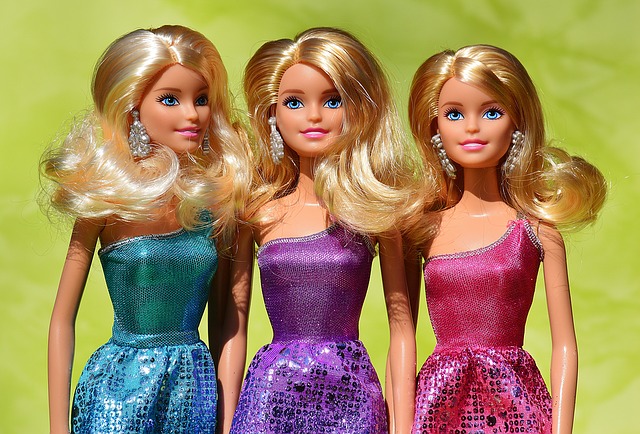
Barbie and Balmain Pair Up for Couture NFT Project

Barbie, the quintessential American toy by Mattel, announced a partnership with French fashion powerhouse Balmain.
This collaboration is surprising on many levels. First, there is no actual doll involved. Second, the collection is a mix of real fashion and NFTs.

The collection includes 50 adult garments inspired by the iconic Barbie doll. Avatars of diverse racial backgrounds model the clothes, and three NFTs of unique looks are being sold at auction.  Barbie is extending its efforts into the realm of virtual collectibles as each NFT includes a doll-sized physical design. The entire collection and the NFT designs are unisex: there is no more Barbie and Ken, just high-end fashion for all.

Mattel also has a partnership with Gucci to create Hot Wheels Collectibles.

Recycled Footwear Takes a Step Forward

Rothy’s, the American eco-friendly shoe brand, has gotten a significant investment from the owner of Havaianas. Based in San Francisco, California, and valued at $1 billion, Rothy’s also produces purses, bags, wallets, and men’s loafers, all from recycled and marine plastic.

Over the last few years, investors and customers have paid more attention to the environmental and social impact of the companies they back or buy. AllBirds, another sustainable shoe and fashion company, made a 2021 IPO valued at $4 billion.

Rothy’s was founded by Stephen Hawthornthwaite, chief executive, and Roth Martin, president. They remain significant owners and are involved in operational oversight.

US Economic Job Creation

America’s job creation count has been in flux for a while now, probably in connection to the pandemic. In August the hoped-for and economic policymaker predicted job gain was 720,000.  But this figure fell substantially short at 250,000. September was equally (if not more) disappointing with a mere 194,000 jobs added to available options for the unemployed.  These numbers did not fare well for predictions of a strong economic bounce back.

But October is looking brighter.  According to a recent report from the Bureau of Labor Statistics, there has been a drop in unemployment from 5.2 to 4.8 percent.  The expectation was 5.1 percent so this should have been seen as good news. But not everyone felt that way.  Economic Research Director at Indeed, Nick Bunker said that

“This is quite a deflating report. The hope was that August was an anomaly but the fact is, the delta variant was still with us in September. One optimistic interpretation is that Covid-19 case counts are receding, so future months should be stronger. But the reality is that we are still in a pandemic.”

Another CNBC report explained that the 4.8 percent unemployment rate is actually the lowest that it has been since February 2020.  

America’s Economy: Fighting Back

Wedding, Couple, Marriage, Ceremony, Bride, Husband

There have been some great numbers showing that the US economy could well be on its way back from the coronavirus pandemic that caused substantial financial loss in many industries.  Thanks to the fact that 300m vaccination shots have been given nationwide (a number that is continuing to increase), a true sense of “back to business” is being felt.

Take a look at the fashion industry for example. For so long people were in Zoom or other online meetings so were not so interested in purchasing new clothing. Marshalls and TJ Maxx encountered a 12 percent increase in sales this quarter and Rent the Runway has reported a demand for crop tops four times what it was in 2019.

WFH is being slowly morphed back into return to the workplace. Large corporations like Bank of America and Morgan Stanley are bringing their workers back, with some even offering return-to-work programs.

Large entertainment events are returning as well as we see more weddings take place. With the ditching of masks and opening of restaurants and other leisure activities, there is a lot of hope for the economy showing signs of recovery.

Increased Industry Spending

At the beginning of this year, the US Congress  again received a request from industry trade associations for more spending.  This is not news in and of itself since most years it makes this request but this year the situation is even tougher. 

According to Tom Donahue, CEO of the US Chamber of Commerce, there will be more than just the stimulus endeavors Joe Biden is offering.  He pointed out that:

 “We can also stimulate the economy in a major way if we finally do the long overdue and broadly supported work of rebuilding our infrastructure. It’s the number one way to raise productivity, create jobs, and drive up incomes in a hurry. Our lawmakers should enact a fiscally and environmentally responsible infrastructure package that focuses on urgent needs like roads and bridges, modernizes our critical networks, and upgrades and expands technology like broadband. Even in a 50-50 Senate and a House divided by five votes, this can be done—and it might build some goodwill for bipartisan progress on other priorities. We’ve been working on this for more than 20 years. Let’s find a way to pay for it, and let’s get moving. This year, there can be no excuses for failure.”

In addition, the American Society of Civil Engineers (ASCE) released a series of Failure to Act reports as a prelude to the Report Card for America’s Infrastructure version.  This was an investigation into the metal and concrete-intensive construction, surface transportation, electricity, waterway systems, airports and more.  The summary found:

 “The total documented cumulative investment gap between projected needs and likely investment in these critical major infrastructure systems is more than $2.6 trillion by 2029, and more than $5.6 trillion by 2039”

COVID-19: How the Big Firms Weather the Storm

COVID-19 is affecting everyone: personally, as a family, a community, a business and globally.  In this article we take a brief look at how some firms are faring better than others.

In this kind of crisis climate, the bigger corporations with more resources seem to be managing better, in particular, the tech giants. For example: Amazon, Microsoft and Apple.

Shares of Amazon hiked up almost 30 percent this year from massive increases in online deliveries.  Given the increasing need for cloud services, Microsoft also benefited enjoying a 9 percent increase.  Apple is an interesting case as its product is not necessarily an essential product and right now demand is higher for those offering essential services.  However, once Apple 5G is launched it is anticipated profits will soar.

Overall, as most are realizing, the process of re-opening the economy will take much longer and be much tougher than shutting it down.  Even if some states re-open they will not necessarily be able to function at normal levels since they often depend on other states (that have not yet opened) for their products/services.  Today, companies are often terribly reliant on firms and individuals nationwide – and even worldwide – for completion of product.

COVID-19: New Type of Purchasing?

Markets are moving in new directions.  The demand for digitalization is growing at an extraordinary pace in the age of social distancing.

BlueJeans – one of the world’s largest videoconferencing, screen sharing and video calling companies with around 15,000 customers – is being bought out by Verizon for approximately $400 million. According to Business CEO of Verizon Tami Erwin:

 “As the way we work continues to change, it is absolutely critical for businesses and public sector customers to have access to a comprehensive suite of offerings that are enterprise ready, secure, frictionless and that integrate with existing tools.”

BlueJeans will be built into Verizon’s 5G offering.  Since companies such as Zoom have faced hacking issues and the New York City Department of Education told workers not to use it, other rival companies are now seeking to profit from the new business opportunity.

Starting a Business in 2020: What to Know

In this video, Foundr CEO Nathan Chan, the CEO of Foundr gives a brief introduction to his TOP 5 most profitable online business ideas for 2020. First, use current skills you have and sell it as a service If you are a designer, a videographer, a copywriter, a nutritional advisor etc.: go on to one of the many freelance sites out there and sell yourself. Start a side hustle. Ask yourself what are the skills you have and then go out and sell those skills as a service. Sell your skills to businesses. You can also teach the skills you have. Online courses are becoming increasingly popular.

https://www.youtube.com/watch?v=2y4765zL81g

How Technology Can Help You Tackle Personal Finances


Money management is complicated. Our lives are very busy, and it’s hard to have the time, energy and knowledge to keep on top of every dollar we spend and invest. You become a much smarter consumer, however, when you can keep track of these items. You certainly want to know how much money you are making, where and how you are spending and saving, and ultimately what and with whom to invest.

Thankfully, modern technology offers opportunities to learn about money and the economy, and how to stay on top of your personal needs as they change. There are many ways to use technology today to learn more about investing and budgeting, and to understand ways to save and earn for your future.

Educational Videos

One great way to become a more knowledgeable money manager is to learn from one or more of the companies that produce free educational videos, like this Youtube channel from Fisher Investments, to give consumers more information and know-how to help towards your personal financial success. There are videos of this sort available from many sources, and they offer an incredible resource to enable you to become better educated and to learn from those in the know. Do your own research, watch tutorials, and listen to podcasts to gain financial literacy. Understanding market trends and volatility allows you to have the information, skills and confidence to make responsible financial decisions.

Software Programs and Apps

A critical aspect of managing your cash flow is your ability to plan and organize. Many software programs and apps are available to help you manage your money. Using technology resources can make establishing and maintaining a personal budget easier, faster and more accurate. Cumulatively, these tools offer insight into your spending habits, send warnings as you near your budget boundaries, remind you when payments are due, and more.

With the wealth of technology available today, everyone can find a way to become more financially savvy, and to have programs at their fingertips to help with their financial journey. Look for online resources and technology tools to help you to do your job better. And of course, if the task gets overwhelming or these tools just aren’t enough, you can always reach out to a financial adviser for further assistance.


Business Activity: US

Economies, businesses, GDP, revenue – all encountering a reduced pace of movement.  America seems to be faring somewhat better – thankfully not yet feeling the impact of the interest rate cuts from central banks.  According to figures from the US Commerce Department however, concerns over international trade issues are undermining business activity in the nation.

According to a recent WSJ article however:

“a private survey of business activity separately indicated a slight uptick in U.S. business activity in October, up from earlier lows.”

Still, even though there are real concerns for a recession, other data is indicating that America’s economy is faring well, “reflect[ing] economic strength.”

In addition, last month unemployment fell to a 50 year low and there was a hike in retail sales more than anyone anticipated in August.  According to BCA Research Chief US Investment Strategist Doug Peta:

“While the survey data have been steadily disappointing expectations, hard data have been a source of positive surprises. The labor market remains vibrant enough to exert downward pressure on the unemployment rate, and services continue to expand despite the contraction in manufacturing, both here and abroad. The expansion has slowed, but it’s not finished yet.”