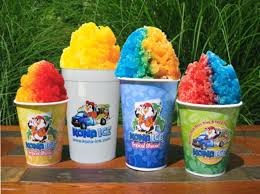
Spotlight on: Kona Ice

Many businesses and potential business people benefit from hearing about the paths that others have taken. Recently, the Fresno Bee did a story on Lisa Quiroz, the owner of the local branch of Kona Ice. Her Kona Ice business follows the Smart Snacks in School nutrition guidelines and provides low-sugar snacks to kids and adults.

The Kona Ice brand started in Kentucky. As Lisa recounts her story, “We found Kona Ice back in 2011. It just kind of struck us as a great business. We purchased our first truck in May 2011, and that was for Fresno. It quickly grew, and we ended up having to turn down so many events that we ended up getting a second truck in 2012. That was for Clovis. We have just continued growing. In 2013 we bought a little mini-cart that we use at Grizzly games and Fresno State football games. We’re hoping to continue growing.”

When asked what drew her to Kona Ice, Lisa said, ” My favorite time — I love when kids are screaming and they’re chanting “Kona Ice” — but my favorite is when I get a really tough guy that you wouldn’t want to see in a dark alley come up, you hand it to them, they take a bite and just smile ear to ear. And they may come back five times and are chatty as can be. It brings out the child in everybody, and that’s what I love about it.”

They serve two types of customers – those who come to their window and those who book them. And they try to create an experience for everyone involved.

Cisco Making Large Investment Plans

Cisco plans to accelerate its investments into communications in the coming two to three years. They have recently announced that they will give $150 million to start-up companies in this time frame. Senior vice president for corporate development, Hilton Romanski, explained that this Internet-based focus will complement other investing themes that include big data and connecting mobile devices.

Cisco Investments is becoming on par with mid-sized venture capital firms with this investment strategy and with the $100 million that Cisco said in January that they would deploy to other start-ups.

Cisco invested $7 million in Everything, a London-based company that connects products to the Internet, and a $14.5 funding round for Ayla Networks, a California based company that helps companies to monitor devices using the Internet.

Cisco also plans to increase its investments in Alchemist Accelerator, which is a San Jose, California-based incubator for start-up companies.

Watch for Next Games Next Game

For those in the gaming world, it’s worthwhile to keep your eyes on Finland. The Finnish start-up Next Games has just raised $6 million in funding. This is the latest of many venture capital investments in the country which is booming with mobile gaming.
Next Games was founded in 2013 by former employees of Rovio and Supercell, creators of the smash games “Angry Birds” and “Clash of Clans.” They plan, now, to work on a mobile game based on the US TV series “The Walking Dead.”

The money for this series A funding round came from the US and Asia. Investors included IDG Ventures, IDG Capital and Lowercase Capital.

Potential Hot Water for Skechers

If you love Skechers USA Inc. shoes, you might love them a bit less in a minute. That’s because the footwear maker is under the gun at the moment for its all-male board of directors. Criticisms logged from CtW, an adviser to union pension funds that has helped to shake up companies, described that the nine-member board “suffers from lengthy tenures and a lack of gender diversity.”

 As they wrote, calling for changes before Sketcher’s annual meeting this spring, “The CtW Investment Group urges a complete and immediate overhaul of Skechers U.S.A., Inc’s board of directors in light of several serious governance risks.”

Six of the company’s directors have been serving for at least 12 years and only five of them are independent.  Sketchers has said they are not available for comment. But CtW Executive Director Dieter Waizenegger has said that if Skechers doesn’t act, CtW may campaign against either some or all of the directors.

As Waizenegger said, “The longer you are on the board, the less obvious it is you can be independent.”

Skechers is certainly doing well in the market place, if not the board room. Their sales in 2012 reached $1.56 billion. Founded in 1992 by Robert Greenberg, who is still the chairman and chief executive, and his son Michael Greenberg, who is the president and a director, the family controls most shareholder decisions.

CVS Says No To Cigarettes

In a move that will clearly have major financial implications, CVS Caremark Corp will stop selling all tobacco products at their 7600 stores by October 1, 2014. This will make CVS the first national drugstore chain in the US that won’t have cigarettes on its shelves.
Everyone from the President to the nation’s health care workers praised the decision. President Obama, a former smoker, said that the decision will help with efforts to “reduce tobacco-related deaths, cancer, and heart disease, as well as bring down healthcare costs.”
Certainly, CVS expects that its decision will hurt its profits in the beginning, but they hope that the decision will boost their appeal as a healthcare provider. They hope to recoup some of the revenue loss by signing up customers for smoking cessation programs and by continuing with their pharmacy healthcare provider services. They have more than 800 MinuteClinic locations where people can come to a walk-in clinic.
While CVS is optimistic, analysts are nervous about the short-term pain. CVS shares fell 1%, while two companies that plan to continue offering cigarettes rose. Walgreen Co.’s rose 3.9% and Rite Aid Corp. rose 2%.
As the U.S. Centers for Disease Control and Prevention Director Thomas Frieden told Reuters, “I think CVS recognized that it was just paradoxical to be both a seller of deadly products and a healthcare provider.”
Some US cities have already taken the lead on this initiative, banning the sale of tobacco products in pharmacies. This includes Boston and San Francisco. As Alexandra von Plato, president and global chief creative officer of Publicis Healthcare Communications Group said, “This is a trend we’re going to see many, many retailers and food companies jump on.”

A New Type of University Experience

A new twist in the online learning model is emerging in California and it will become quite a test case for future programs. Minerva Schools of KGI, an experimental university in San Francisco, is starting to form its first freshman class for the coming fall. The school is a joint effort between Minerva Project (a for-profit company) and Keck Graduate Institute (one of California’s Claremont colleges).
The idea is as follows. While all classes will be held online, first-year students have to live in the residence hall in San Francisco and take some classes together in real time. Research has shown that online courses often fail to retain students and to create ownership over the work. This model is attempting to combat those issues. As Stephen Kosslyn, Minerva’s founding dean and the former dean of social sciences at Harvard, said “We are entirely focused on active learning.” As he explained, this would mean that, prior to each class, students will have to complete assignments that will require participation. They might need to prepare for a debate, present their work or other active activities.
For being part of a cutting-edge experiment, students in the first class will have free tuition for all four years. They will, however, need to pay $19,000 for annual room and board.
The university has been working on the new curriculum since Kosslyn came on board in March. They are also assisted by Minerva’s chairman, former Snapfish president Ben Nelson.
Some of the ideas at Minerva include programs that have fallen out of favor in many other spheres. For instance, all freshmen will have core classes and no electives. They will spend their first year taking four classes that will teach communication, creative thinking, collaboration and critical analysis.
After the first year, students will then select traditional majors in fields that include economics, philosophy and computer science.
Minerva already has the four deans for the core courses in place. They are still hiring professors for the other positions and plan to hire faculty from around the world. They will not, however, offer tenure but will have short-term contracts. It anticipates a ration of approximately 16-17 students for each faculty member.
There is one more catch. During the course of the four-year program, students will be expected to move to other cities where Minerva has resident facilities. As Nelson said, “Experiential learning is all about interacting with the world around you. That is done best when you are immersed in the best the world has to offer as opposed to living in a cocoon.”

They expect 15-38 students in their inaugural class. Time will tell if they succeed.

Netflix Inc. Announces Salary Hike for CEO

Netflix Inc. has recently announced a 50% salary hike for its Chief Executive Reed Hastings. This will bring his salary to $6 million for 2014. Netflix had a very good 2013, with stocks that quadrupled in value this year and with growth in its subscriber base.
Most recently, Netflix has been trying to bring in more subscribers with original programming. Its US customer base rose to 31.1 million streaming subscribers in the last quarter with such programming as “House of Cards” and “Orange is the New Black.” In November alone, Netflix added four new television series and one miniseries. In December, they secured the rights to make new episodes of a spinoff of the widely popular “Breaking Bad” television series.

Time will tell if the salary hike for Hastings will pay off for Netflix. At the moment, it looks like it is.

New Amusement Park Coming in Malaysia

Because the world really needs yet another amusement park, Twentieth Century Fox is now getting into the game. They just announced their plans to unveil “Twentieth Century Fox World.” They will open it in 2016 as part of Malaysia’s Resorts World Genting. This is a leisure and entertainment complex an hour outside of Kuala Lumpur.

The 25 acre park is supposed to have 25 rides and attractions that will be based on Fox films like “Rio,” “Ice Age,” and “Planet of the Apes” among others. As Jeffrey Godsick, president of Twentieth Century Fox Consumer Products said,

“The opening of the first Twentieth Century Fox theme park at Resorts World Genting takes our rich history of storytelling to a whole new level and will provide an exceptional entertainment experience. People from around the world will gather here in Malaysia to become part of the story and to experience the magic and adventure of their favorite Fox properties.”
They are teaming with Genting Malaysi, a leisure and hospitality corporation, to build the park.

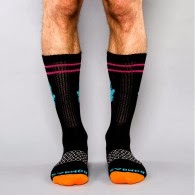
Bombas Socks: Changing The World One Sock At A Time

If you haven’t yet encountered Bombas Socks, it’s time that you did. Inspired by a quote they say in 2010 by Major George Hood, the Chief Communications Officer for the Salvation Army, Randy Goldberg and David Heath founded Bombas Socks. The quote said, “Through our work with those in need, we know that socks are oftentimes the most requested clothing item at homeless shelters.
Realizing the need, they created a company that donates a pair of socks to a homeless shelter for every pair of socks purchased. They have partnered with Hannah’s Socks, which is a non-profit that gets socks to those in need. Their goal is to distribute 225,000 socks this year and Bombas is committed to helping. They’ve already donated 26,000 pairs of socks in 2013.
In a recent interview on Reuters, founder Randy Goldberg was asked how they managed to raise over $140,000 with their crowdfunding campaign on Indiegogo. As Goldberg explained, 

“I think we were able to raise over $140,000 because we treated the campaign like the beginning of a business, not just a one time campaign. Customer service is at the center of our company, and it was a big part of the campaign from the beginning. We responded to every comment and inquiry on Indiegogo, and we created new ways to keep our supporters and early evangelists involved on a week by week basis. We waited to launch the campaign until we felt we had our voice and story fine tuned. And then we kept things interesting by adding new goals, images, art, and mini campaigns along the way. For us, the key was keeping the energy up, attention to detail, and the support we got from our friends, Indiegogo, and our early supporters.”

Offering lessons to other entrepreneurs, he said, “I think the biggest lesson is that there’s not really room for compromise if you believe in your product. We wanted to make an athletic sock that felt like it cost upwards of twenty dollars, we wanted to give away a pair of socks for every pair we produced, and we wanted to keep the price under ten dollars. So we had to look at dozens of factories to find the right fit. We had to talk to multiple fulfillment partners. We had to test over and over again. It took a lot of R&D, a few left turns, and some tough decisions, but we’re proud of the end product.”