Something’s Brewing at Starbucks

Employees at four Starbucks stores in New York City have petitioned to unionize through the National Labor Relations Board. This development follows months of efforts to unionize at three Buffalo Starbucks locations, two of which have already successfully established unions. The NYC Starbucks employees have requested to hold a vote on March 3.

In letters to Starbucks president and CEO Kevin Johnson, workers from the four stores expressed concerns about deteriorating work conditions during the pandemic and unfair salaries. The employees have received support from more than 70 New York elected officials, including City Council members and U.S. representatives, according to the New York Times. A signed letter read: “New York City is a union town and union-busting has no place here. We believe that these organizing efforts will ultimately lead to a stronger and more sustainable future for Starbucks, the workers, and our city and state.”

Although Starbucks has claimed not to be anti-union, just last week the company fired seven Memphis employees who tried for form a union claiming they had violated company policies. A few years earlier, two Philadelphia workers trying to unionize were also fired.


Mid-America’s Economy is Strong, if Slowing

Creighton University’s Mid-America Business Conditions Index, a premier economic barometer for the region of states between Minnesota and Oklahoma, shows a recent slight drop. Nevertheless, it remained above neutral growth for the 20th consecutive month. Employment in the region dropped to 43.6, its weakest since June 2020, the third consecutive decline in the monthly index.

“Creighton’s monthly survey results indicate the region is adding manufacturing activity at a positive pace, but with much weaker job numbers for the month. In terms of supply chain disruptions and bottlenecks for the first half of 2022, approximately one-third of supply managers expect delays to worsen with only 12% anticipating improvements. Despite healthy growth over the past year, compared to its pre-pandemic level, U.S. Bureau of Labor Statistics employment data indicate that the region has lost 16,000 manufacturing jobs, or 1.1%,”

Dr. Ernie Goss, the study director

Barbie and Balmain Pair Up for Couture NFT Project

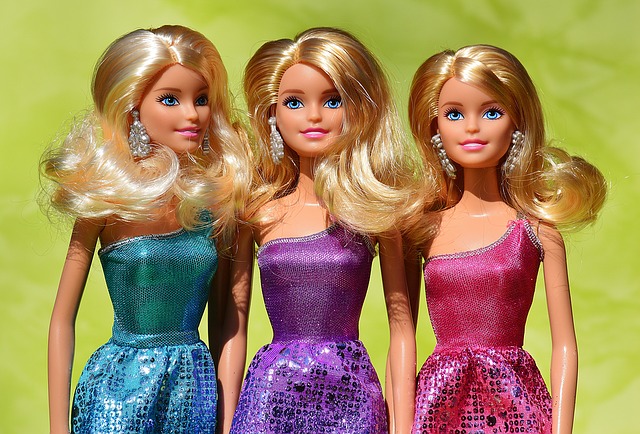
Barbie, the quintessential American toy by Mattel, announced a partnership with French fashion powerhouse Balmain.

This collaboration is surprising on many levels. First, there is no actual doll involved. Second, the collection is a mix of real fashion and NFTs.

The collection includes 50 adult garments inspired by the iconic Barbie doll. Avatars of diverse racial backgrounds model the clothes, and three NFTs of unique looks are being sold at auction.  Barbie is extending its efforts into the realm of virtual collectibles as each NFT includes a doll-sized physical design. The entire collection and the NFT designs are unisex: there is no more Barbie and Ken, just high-end fashion for all.

Mattel also has a partnership with Gucci to create Hot Wheels Collectibles.

America’s Job Market

There has not been so much good news for America’s labor  market recently. Interestingly, while there seemed to be an increase in wages and hours spent in the office, unfortunately this did not quite mirror productivity and output. In fact, at the end of the third quarter, figures showed that productivity dropped (SAAR) by 5.2%, making it the largest drop since Q21960 (which recorded a drop of 6.1%).

Despite these pessimistic and potentially troubling numbers, according to Action Economics’ Chief Economist Mike Englund, we should be seeing a “solid gain” for 2021 end of year of 1.7 percent.

According to recent Federal Reserve data however, a drop in US consumer credit from $27.8bn September to $16.9bn in October was recorded.  This was somewhat of a blow to economists who were anticipating a gain of $25bn.

Recycled Footwear Takes a Step Forward

Rothy’s, the American eco-friendly shoe brand, has gotten a significant investment from the owner of Havaianas. Based in San Francisco, California, and valued at $1 billion, Rothy’s also produces purses, bags, wallets, and men’s loafers, all from recycled and marine plastic.

Over the last few years, investors and customers have paid more attention to the environmental and social impact of the companies they back or buy. AllBirds, another sustainable shoe and fashion company, made a 2021 IPO valued at $4 billion.

Rothy’s was founded by Stephen Hawthornthwaite, chief executive, and Roth Martin, president. They remain significant owners and are involved in operational oversight.

American Economic Recovery in the Wake of COVID-19

America’s economic recovery is going well. Unemployment figures are going down (recent report showing that those filing for benefits dropped to the lowest level since 1969); inflation did increase but not as much as economists had predicted. And consumer spending over the last month showed an impressive level of optimism.

With this data, there is a lot of optimism about the speed at which the economy is recovering.  So much so that Wall Street actually raised their predictions for Q4 2021 growth. And not by just a little bit.  Morgan Stanely’s economists changed their growth predictions by more than double – from 3 to 8.7 percent (with JPMorgan economists similarly going from 5 to 7 percent). These numbers had a domino effect, leading to a predicted increase in GDP estimates as well.

But there still needs to be caution exercised. Given the new COVID-19 variant (Omicron) there has been some pessimism and fear which has obviously impacted the recovery as well. Nonetheless, the Gross Domestic Income (GDI) – a measure that’s based on individual and company income – increased substantially more than it did year on year in 2020. According to Harvard economist Jason Furman, third quarter new GDI figure translates into 4.4% growth which was 100% greater than what was originally reported.

Unemployment figures also dropped with claims being made by jobless for November 20th week ending dropping to a  50-year low, indicating a very strong jobs report with unemployment figures plummeting to even less than before the pandemic hit.

Understanding Data from Q3 2021

How have things been going with the post-pandemic(?) economic recovery?  In this video, CNBC’s Rick Santelli looks at that question in relation to figures from Q3 2021 which showed a slight increase in economic growth (2%). According to the Commerce Department, while that is an escalation, unfortunately it is the lowest of the coronavirus recovery era yet which raises cause for concern.

US Economic Optimism

There was a jump in stocks this month with large investment firms reporting strong results.  October’s earnings reports managed to calm investors. Labor market and inflation numbers were good and provided optimism for those concerned with higher rate estimates.

There have been drops in unemployment too as fewer Americans are collecting benefits – the lowest for 19 months, dropping to less than 300,000. Indeed, according to chief U.S. economist at High Frequency Economics, Rubeela Farooqi:

“The data support the narrative that businesses are increasingly reluctant to let go of workers amid a severe supply shortage. But it is still not clear if the expected supply surge that failed to materialize in August and September will appear going forward.”

The fact that the coronavirus Delta variant’s impact on the economy is waning has also been helpful. While of course the pandemic and its repercussions are still very much a part of everyday life, the emergent panic has waned. 

That’s not to say that there is not a huge – and justified – concern about increasing costs, labor and supply chain issues. But at least the above news is giving optimistic hope for economists in some areas.

Economic Status: Biden’s First Quarter

How does the economy look after President Joe Biden’s first quarter?  There is some good and some not-so-good.  Here we take a look.

The Bureau of Economic Analysis  reported a slightly faster rate of growth seen by more consumer spending (notably going out to eat, traveling, etc.) inventory investment and exports, marking the second time the growth pace was revised higher in the quarter. 

Between April and June, GDP expanded at 6.7% which was a little higher than the earlier estimates of 6.5%.

The PCE Price Index  however was remained at a disappointing 6.5% which is the highest that it has been since the early 1980s.

According to Action Economics Chief Economist Mike Englund, expectations were not met which he believes is due to “supply chain disruptions, which actually become more severe in Q3.”

One of the problems currently plaguing America is scarce labor, thanks in part to the exodus of many workers across industries.

US Economic Job Creation

America’s job creation count has been in flux for a while now, probably in connection to the pandemic. In August the hoped-for and economic policymaker predicted job gain was 720,000.  But this figure fell substantially short at 250,000. September was equally (if not more) disappointing with a mere 194,000 jobs added to available options for the unemployed.  These numbers did not fare well for predictions of a strong economic bounce back.

But October is looking brighter.  According to a recent report from the Bureau of Labor Statistics, there has been a drop in unemployment from 5.2 to 4.8 percent.  The expectation was 5.1 percent so this should have been seen as good news. But not everyone felt that way.  Economic Research Director at Indeed, Nick Bunker said that

“This is quite a deflating report. The hope was that August was an anomaly but the fact is, the delta variant was still with us in September. One optimistic interpretation is that Covid-19 case counts are receding, so future months should be stronger. But the reality is that we are still in a pandemic.”

Another CNBC report explained that the 4.8 percent unemployment rate is actually the lowest that it has been since February 2020.